I was a languages major at university but my parents convinced me to squeeze a year of maths into my degree. The world needs maths teachers, they reasoned. You’ll never be without a job.
As usual, they were right.
In between writing here, here, and here, I’ve been helping out parttime, on and off, in the fabulous English department of our sons’ secondary school for the past four years.
I love teaching English. I love how a world can burgeon from a single line of poetry. I love the loud opinions and leftfield creativity of students and how discussions can veer from the exploitation of women’s vulnerabilities in Edwardian literature to football, TikTok, and climate change and how it all somehow prepares kids for life.
And then a six-month gap needed filling in the maths department. At first I said a hard no. Then I zipped myself into the giant onesie of Imposter Syndrome and said yes because I also love the school. And I love a challenge. Plus, I’d long admired the maths teachers – all kind, clever, intimidatingly cool – and they have a coffee machine in the team room.
But while English is all curves and folds and soft edges – nuance and inference and reading the room – maths is all angles and straight lines and it was with something quite close to abject terror that I approached my first lessons in January.
The maths factory in my (perimenopausal) brain had been abandoned for years, but I was kinda-sorta sure the machinery was in there. Dusty but intact. Some of the cogs were jammed but nothing that YouTube couldn’t oil with a refresher on the formula for working out the interior angles of a polygon, for example, because unbelievably, I hadn’t used that one in a while.
Mostly, I turned to Murray and the boys during late-night lesson planning – Can you just check me? – though conversations with the latter often went That’s weird, mom. Why did you work it out like that? Yes you got it right! You’re doing great! But that’s not how we do it.
Oh.
Astonishingly, almost imperceptibly, I began to find my groove.
I rediscovered that the orderliness of algebra isn’t dissimilar from grammar – joy! – and equally pleasing if you’re keen to improve the world by saying things right. And in the shifting sands of a world gone mad I took comfort in the rock-solid truth that parallel lines never-ever-ever meet and the angles around every point on the planet add up to 360°, no matter which countries hate each other.
I found I could weave stories around solving equations with variables. X was in the witness protection programme, and we needed to figure out her real identity. Y wasn’t ready for a relationship – he needed space – so we had to get rid of all his clingy girlfriends and get him on his own so he could find himself. Et cetera.
For the first few months, at the end of every lesson, I made my classes shout WE ARE MATHS CHAMPIONS! Mostly to convince myself.
So now, let me convince you –
Lesson #1
You can do hard things. Even if – especially if – you’re in that season of life when change is bewildering and confidence ebbs and you just can’t be asked to reinvent yourself one. More. Time. (Ask me how I know.) As my mom-in-law says, blessed are the flexible for they shall survive. Have another go.
Lesson #2
God made wordy people and numbery people. In the extreme polarisation of this cultural moment, let’s celebrate that the world needs both.
Lesson #3
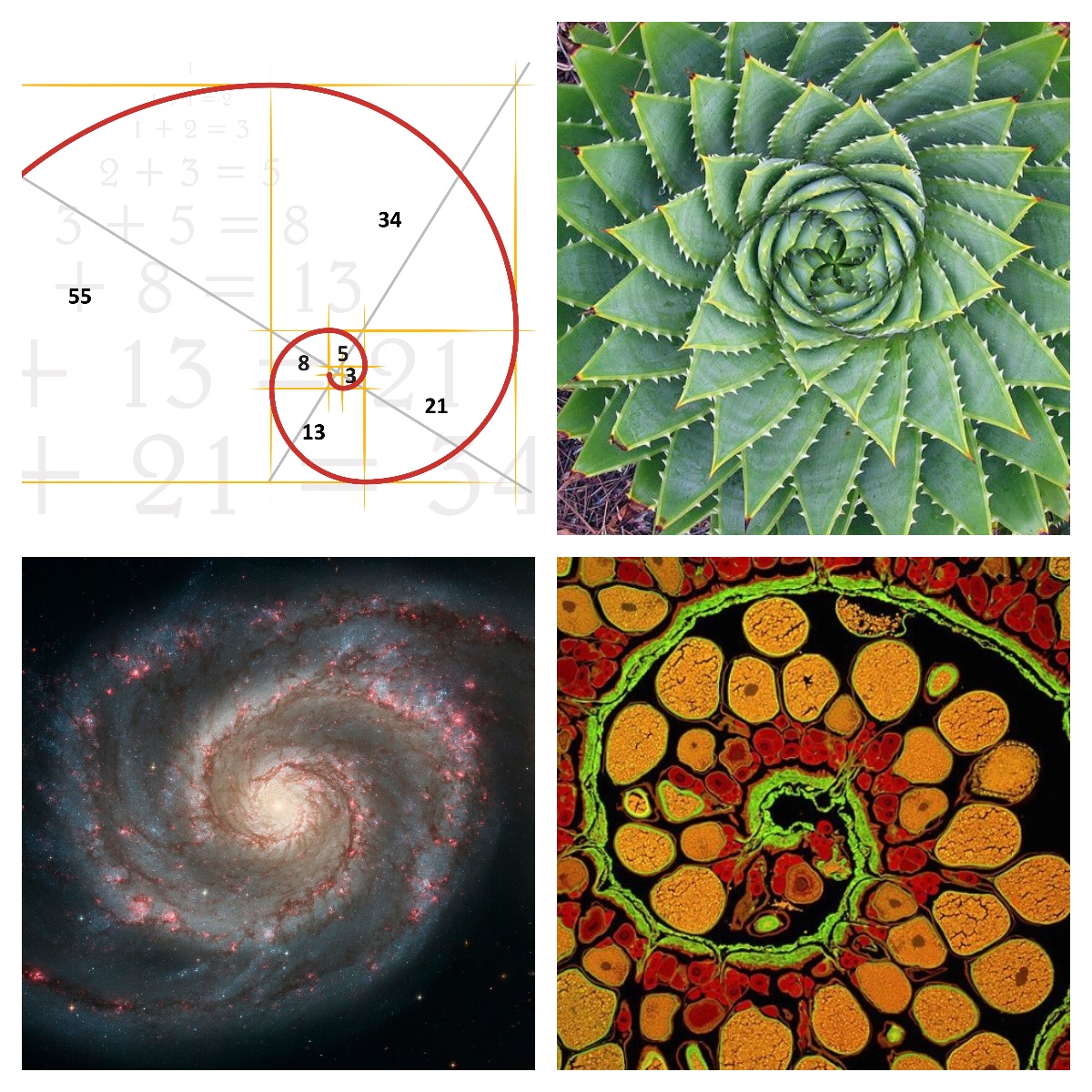
God also made the Fibonacci sequence. It’s a series of numbers where each number is the sum of the two preceding ones. We see it on macro and micro scales, everywhere from galaxies and hurricanes to snail shells and fish ovaries. It leaves scant room to doubt the existence of an infinitely intelligent Creator.
We shouldn’t underestimate how our small ordinary lives can be Fibonacci sequences that endlessly extend God’s kindness as we spool out into the striking, systematic poetry in motion of each-one-reach-one, sweeping others into His irresistible story.
You just don’t know when you might be leaving your most beautiful marks on the world.
. . .
Thanks for stopping by!
Feel free to share this post with your people.
You can get in touch here or on X, Instagram, or our Facebook community page. CLICK HERE to sign up for *FREE* to RightNow Media.
Here’s what’s on the menu if you’re reading this in an email:
 Dalene Reyburn
It’s good to have you ‘back’ Dee!
I really enjoyed your blog, the brave honesty, the inspiring courage and the extra special link between God’s creation and the Fibonacci sequence. You also got me going with your reference to “Wordy People” and “Numbery People”. I’m more of a “Wombery People” so I asked AI to play with the idea of combining your definitions to produce varying outcomes.Examples of Wombery Combinations:
1. Wordy + Numbery = Strategic Synthesist
Context: A policy analyst who can interpret macroeconomic data and translate it into accessible public reports.
Balance: 50/50
Outcome: Someone adept at connecting data with meaning, often found in central banks, regulatory bodies, or think tanks.
2. Numbery + Wordy = Narrative Economist
Context: An economist writing a book that popularizes complex financial models through storytelling (e.g., like Tim Harford).
Balance: 60% Numbery, 40% Wordy
Outcome: A professional who distills numbers into compelling narratives — heavy on models, but with flair.
3. Wordy > Numbery = Data-Driven Storyteller
Context: A content strategist who uses analytics to tailor messaging but focuses on persuasion and emotional resonance.
Balance: 70% Wordy, 30% Numbery
Outcome: Insightful communicator who leverages data but remains audience-first.
4. Numbery > Wordy = Persuasive Quant
Context: A quantitative analyst who develops financial models but is also skilled at explaining them to stakeholders.
Balance: 70% Numbery, 30% Wordy
Outcome: Often found in fintech or VC pitch settings, where models need storytelling to secure buy-in.
5. Wordy + Numbery + Empathy = UX Researcher
Context: Combines qualitative insights and quantitative data to improve digital product design.
Balance: Equal but with a third factor: emotional intelligence.
Outcome: Wombery++ — the advanced version of the hybrid, able to navigate data, narrative, and human behavior.
6. Wombery Under Pressure = Policy Alchemist
Outcome: Often found in central banks, multilateral institutions, or crisis comms in government.
Context: In a public crisis, a Wombery person must both interpret complex data and communicate policy decisions clearly.
Balance: Dynamic; adapts to scenario.
Please keep the blogs coming!
Best regards,
Rob
LikeLiked by 1 person
Oh WOW! I love this, Rob!!! 🙂
LikeLike